Maple vs Roasted Maple Electric Guitars: Which Should You Buy?
As an Amazon Associate we earn from qualifying purchases. Links on this page are affiliate links.
When you compare maple vs roasted maple electric guitar options, you are looking at two distinct approaches to neck construction and overall instrument design. Both instruments feature maple necks, but one uses standard maple while the other uses a roasted variant. The primary difference lies in their scope: one is a versatile DIY kit focused on assembly, while the other is a specialized, multi-scale 7-string instrument built for modern metal. You need to decide which build style fits your playing needs.
Key differences
| Aspect | Leo Jaymz DIY Electric Guitar Kit | AKLOT XRN Multi-Scale 7-String Electric Guitar |
|---|---|---|
| Neck Material | Maple | Roasted Maple |
| Number of Strings | 6 (implied by PS style) | 7 |
| Body Type | Mahogany | Okoume with Arch-Top |
| Scale Length | Standard (PS style) | Multi-Scale (25.4" to 27") |
| Fretboard Material | Blackwood | Roasted Maple |
Which one should you choose?
Choose Leo Jaymz DIY Electric Guitar Kit if
- You want a DIY kit with a mahogany body and blackwood fretboard for assembly.
- You prefer a standard scale length and a bolt-on neck design.
Choose AKLOT XRN Multi-Scale 7-String Electric Guitar if
- You need a 7-string guitar with a multi-scale design for extended range playing.
- You want a roasted maple neck and fretboard for a specific feel and stability.
Verdict: Choose the Leo Jaymz kit if you prefer a traditional six-string DIY build with a mahogany body. Pick the AKLOT XRN if you require a seven-string multi-scale instrument with a roasted maple neck for modern metal tones.
Maple vs Roasted Neck Specs
neck material
The Leo Jaymz DIY kit uses a standard maple neck, a traditional choice known for bright tonal characteristics and structural stability. In contrast, the AKLOT XRN features a roasted maple neck. Roasting is a thermal treatment process that stabilizes the wood, often resulting in reduced weight and increased resonance. This process can also enhance the wood's durability and resistance to environmental changes. You should consider how these material differences affect the overall feel and sustain of the instrument during extended playing sessions.
number of strings
String count significantly alters the guitar's versatility and range. The Leo Jaymz kit is a standard six-string configuration, suitable for most rock, blues, and pop genres. The AKLOT XRN is a seven-string model, designed for extended-range play. This extra string allows for deeper low-end tones and is popular in modern metal and djent styles. If you require standard tuning flexibility, the six-string is sufficient. For players seeking heavier tones and wider fretboard reach, the seven-string offers distinct advantages.
pickup configuration
Both guitars utilize humbucker pickups for higher output and noise reduction. The Leo Jaymz kit includes two humbuckers, providing a classic dual-humbucker setup. The AKLOT XRN also features a humbucker-humbucker (HH) configuration. However, the AKLOT pickups are specifically designed with a slanted, scale-matched wind to accommodate its multi-scale design. This ensures consistent output across all strings. The Leo Jaymz pickups are standard for its class. Both setups deliver solid performance, though the AKLOT's design is tailored for its specific scale lengths.
fretboard material
The fretboard material impacts tone and playability. The Leo Jaymz kit features a blackwood fingerboard, which offers a dense, smooth surface for fast playing. The AKLOT XRN uses a roasted maple fingerboard, matching its neck material. This provides a bright, articulate tone with a slick feel. The AKLOT also specifies 24.2mm stainless steel rounded ball-end frets, which can enhance sustain and bending ease. The Leo Jaymz data does not specify fret material or size, making a direct comparison on fret quality difficult based on available specs.
body type
Body construction affects resonance and comfort. The Leo Jaymz kit has a mahogany body, a dense wood that typically provides warm tones and good sustain. It is a solid body design. The AKLOT XRN features an okoume body with an arch-top design. The curved top can enhance tonal resonance and projection. The arch-top also promotes better hand positioning, potentially reducing arm fatigue. The Leo Jaymz is a flat solid body. Both designs offer distinct aesthetic and tonal profiles, with the AKLOT offering a unique curved structure.
Maple vs Roasted Maple: Who Wins
Players needing extended range and modern metal tone
The AKLOT XRN features a roasted maple neck and seven strings. This multi-scale design maintains tension for low tunings while keeping high strings playable. The roasted wood offers stability and a fast profile. You get specific hardware like staggered saddles for precision intonation and clarity in heavy playing styles.
Builders seeking a traditional bolt-on DIY project
The Leo Jaymz kit provides a standard maple neck with a mahogany body. It includes all components for assembly, such as humbucker pickups and a Tune-o-Matic bridge. The bolt-on construction allows for easy neck replacement. This setup is ideal for those who want a classic PS-style guitar with a blackwood fingerboard.
Guitarists prioritizing neck speed and low action
The roasted maple neck on the AKLOT XRN is designed for speed. It has a Flat-C profile that reduces drag. The 16-inch radius and stainless steel frets allow for very low action without choking. This combination supports effortless bends and fast lead work, making it suitable for aggressive playing techniques and complex solos.
Quick picks
| # | Product | Best for | Price |
|---|---|---|---|
| 1 | Leo Jaymz DIY Electric Guitar Kit | building a PS-style guitar with mahogany and maple | Check price of Leo Jaymz DIY Electric Guitar Kit on Amazon |
| 2 | AKLOT XRN Multi-Scale 7-String Electric Guitar | modern metal players needing extended range | Check price of AKLOT XRN Multi-Scale 7-String Electric Guitar on Amazon |
The products compared

Leo Jaymz DIY Electric Guitar Kit
Best for: building a PS-style guitar with mahogany and maple
- Neck Material
- Maple (what this guide is about)
- Body Material
- mahogany
- Fretboard Material
- blackwood
- Pickup Configuration
- 2 humbucker pickups
- Dimensions
- 3.2 × 27.6 × 13 inches
View on Amazon: Leo Jaymz DIY Electric Guitar Kit Affiliate link
This Leo Jaymz kit gives you a PS-style electric guitar with a solid mahogany body and a maple neck. It includes two humbucker pickups and a blackwood fingerboard with rectangle inlays. The package contains all components, wiring, and hardware for assembly. You get a bolt-on neck design suitable for building your own instrument. It is a practical option for those who want to assemble a guitar from scratch using standard parts.
Pros
- Solid mahogany body construction
- Maple neck with bolt-on design
- Includes two humbucker pickups
- Blackwood fingerboard with rectangle inlays
- All wiring and hardware included
Cons
- Requires full assembly from kit components
- Neck material is standard maple, not roasted
- Fingerboard is blackwood rather than common rosewood or maple
Good fit if
- You want to build a PS-style guitar yourself
- You prefer a mahogany body and maple neck combination
- You need a complete kit with all hardware included
Skip if
- You want a pre-assembled instrument ready to play
- You specifically require a roasted maple neck for stability
- You prefer a rosewood or maple fingerboard over blackwood
Verdict: Leo Jaymz PS DIY Mahogany/Maple Kit is a complete building solution for those who want a mahogany body and maple neck guitar. It suits builders who value the inclusion of all necessary hardware and pickups for a PS-style instrument.
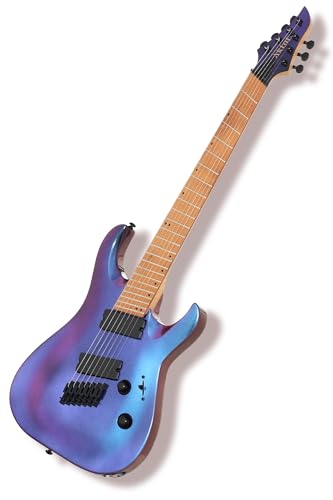
AKLOT XRN Multi-Scale 7-String Electric Guitar
Best for: modern metal players needing extended range
- Neck Material
- Roasted Maple (what this guide is about)
- Body Material
- Okoume
- Number of Strings
- 7
- Body Type
- Solid body
- Scale Length
- 25.4" - 27"
- Pickup Configuration
- HH
View on Amazon: AKLOT XRN Multi-Scale 7-String Electric Guitar Affiliate link
This AKLOT XRN is a 7-string solid body electric guitar featuring a roasted maple neck. It uses a multi-scale design, extending from 25.4 inches to 27 inches, to maintain tension on lower tunings. The body is okoume wood with an arch-top design. It includes HH pickups and a hardtail bridge with staggered saddles. This kit suits players seeking extended range and modern metal tones.
Pros
- Roasted maple neck for fast playability
- Multi-scale length from 25.4 to 27 inches
- Okoume solid body with arch-top design
- HH pickup configuration with scale-matched wind
- Hardtail bridge with individual staggered saddles
Cons
- Heavier at 6.61 pounds
- Requires assembly as a kit
- No included case or gig bag
Good fit if
- You want extended range for low tunings
- You prefer roasted maple necks
- You need a multi-scale setup
Skip if
- You want a standard 6-string guitar
- You prefer a finished instrument
- You need a lighter build
Verdict: The AKLOT XRN 7-String Roasted Maple offers a specialized multi-scale design for modern metal players. It fits those who want extended range and roasted maple speed.
Specifications side by side
| Spec | Leo Jaymz DIY Electric Guitar Kit | AKLOT XRN Multi-Scale 7-String Electric Guitar |
|---|---|---|
| Body Material | mahogany | Okoume |
| Neck Material | maple | Roasted Maple |
| Fretboard Material | blackwood | not stated |
| Pickup Configuration | 2 humbucker pickups | not stated |
| Number of Strings | not stated | 7 |
| Body Type | not stated | Solid body |
| Scale Length | not stated | 25.4" - 27" |
| Dimensions | 3.2 × 27.6 × 13 inches | 38.6 × 12.6 × 2.36 inches |
| Weight | not stated | 6.61 pounds |
| Color | PS | Violet |
| Model | DIY | XRN-7 AD |
Frequently asked questions
Is roasted maple better for high humidity environments?
Roasted maple is generally more stable in varying humidity. The thermal treatment reduces moisture content, making the wood less prone to swelling or shrinking. This stability helps maintain neck alignment and playability in damp conditions compared to standard maple.
Does a roasted maple neck feel smoother than standard maple?
Many players report a smoother feel with roasted maple. The roasting process alters the wood’s density and texture, often resulting in a slicker surface. This can reduce friction under your hand, allowing for faster movement along the fretboard.
Will a roasted maple neck warp less over time?
Roasted maple is less likely to warp due to its reduced internal stress. The heating process stabilizes the wood structure, making it more resistant to changes caused by temperature and humidity shifts. This leads to long-term structural consistency.
Does roasted maple affect the tone of an electric guitar?
Roasted maple often produces a slightly warmer tone than standard maple. The process can darken the wood’s sonic character while retaining clarity. You may notice increased midrange presence and a more focused attack compared to the bright ring of untreated maple.
Is roasted maple harder than standard maple?
Roasted maple is typically harder and denser. The thermal treatment drives out moisture and hardens the cell walls. This increased hardness can improve sustain and provide a more solid feel under your fingers during aggressive playing styles.
Can I choose a roasted maple neck for a multi-scale guitar?
Yes, roasted maple is available for multi-scale designs. The AKLOT XRN features a roasted maple neck with a multi-scale layout. This combination offers extended range stability and improved string tension management for low tunings, suitable for modern metal players.
Does standard maple offer better brightness than roasted maple?
Standard maple is known for its bright tonal characteristics. It provides a crisp attack and clear high-end response. If you prefer a sharper, more articulate sound, standard maple may be the better choice compared to the slightly warmer profile of roasted variants.
Is roasted maple more expensive to manufacture?
Roasted maple requires additional processing time and energy. The thermal treatment adds steps to the manufacturing process. This extra labor and resource usage often results in a higher production cost compared to standard, untreated maple necks.